Source palm rejection active stylus for iPad Android Tablet
Compare 30 listings of palm rejection active stylus pens featuring metal bodies, Type-C charging, and long battery life. Buyers can evaluate specifications like tilt sensing, pressure sensitivity, and compatibility with iPad models from 2018 onwards.
Key considerations
Products List
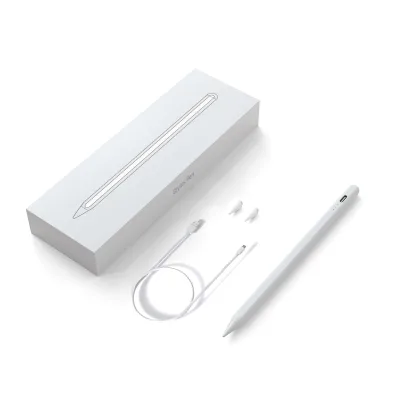
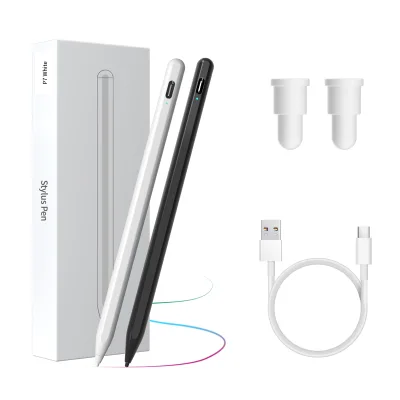


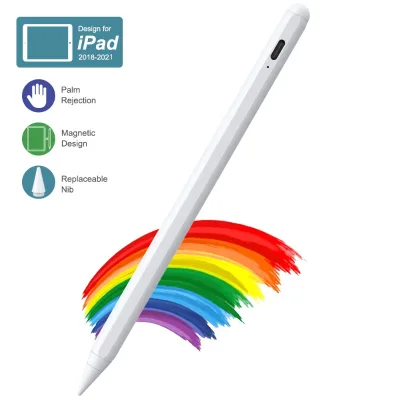


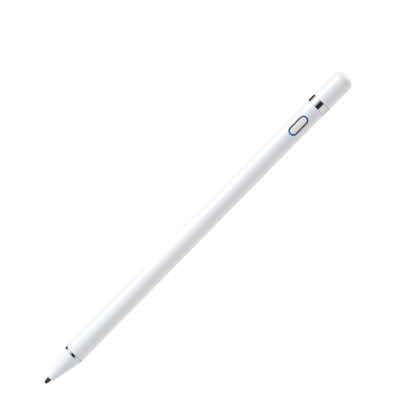




Comprehensive Sourcing Guide
Strategic Sourcing Guide for Palm Rejection Active Stylus Solutions
The global demand for precision input devices has surged as digital creation and note-taking become integral to professional workflows. Among the various categories of input tools, the palm rejection active stylus stands out as a critical component for users who require the natural feel of pen-on-paper interaction on capacitive touchscreens. For B2B procurement professionals, sourcing these devices involves navigating a complex landscape of technical specifications, compatibility constraints, and supply chain reliability. This guide provides a structured approach to evaluating active stylus solutions, focusing on the specific attributes observed in current market listings, such as the BASIX brand offerings and generic active capacitive models. Buyers must distinguish between generic active capacitive pens and those with advanced features like tilt sensing and pressure sensitivity to ensure the selected product aligns with the intended application, whether for education, enterprise note-taking, or professional digital art.
Technical Architecture and Functional Capabilities
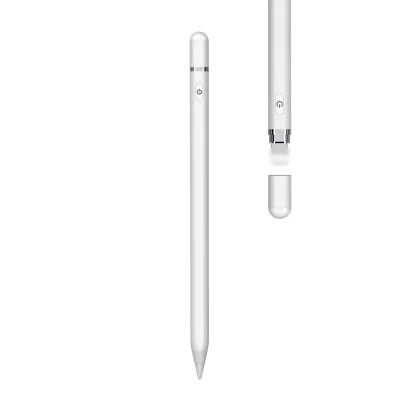
The fundamental distinction of an active stylus lies in its internal electronics, which differentiate it from passive capacitive styluses. The observed market data indicates that active capacitive technology is the standard for devices claiming palm rejection. This technology relies on a battery-powered circuit within the pen to generate an electromagnetic field that the tablet screen can detect, allowing for precise cursor positioning without the user's hand interfering with the input. A critical observation from current product listings is the presence of "active sensing technology" and "palm rejection" as core features. These features are not merely marketing terms but require specific hardware integration. For instance, the BASIX Stylus Touch Pen 6WP-KC and similar models like the P7 series explicitly list "Palm Rejection" and "tilt angle sensing" as attributes.
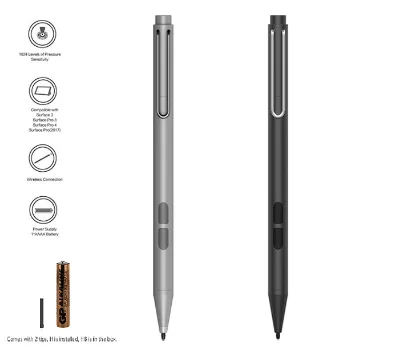
Furthermore, the functional depth of these devices varies significantly. While some units offer basic "General + special stylus" functionality, advanced models provide "Pressure-Sensitive Strokes" for line weight variation and "Tilt-Based Shading" for sketching. The core functions observed include double-tap gestures to switch tools and magnetic attachment for charging, which are specific to certain tablet generations. Buyers must verify that the stylus supports the specific core functions required for their use case. For example, a procurement order for a design team requires pressure sensitivity and tilt support, whereas a bulk order for a school district might prioritize battery life and durability over advanced shading capabilities. The material composition, often cited as "Metal, Aluminum" or "Metal," also plays a role in the device's weight and balance, with observed lengths ranging from 16.3 cm to 16.7 cm.
Compatibility and Hardware Constraints
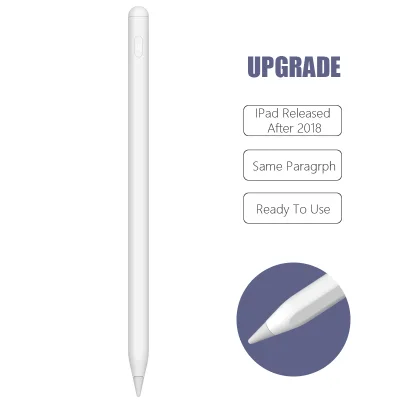
One of the most significant risks in sourcing active styluses is compatibility with the target hardware. The supply chain data reveals strict constraints regarding device support. Specifically, certain models are listed with the specification "Only support IPAD above 2018." This indicates that the electromagnetic resonance or specific communication protocols required for palm rejection and active sensing are not universal across all tablets. Procurement teams must rigorously audit the "Applicable Models" field for every supplier quote. The observed listings mention support for "Mobile Phone, Tablet, Laptop," yet the technical reality often limits this to specific operating systems or hardware generations.
The charging mechanism is another critical compatibility factor. The majority of observed active styluses utilize a "Type-c" charging port, which is a modern standard, but the charging time varies. Data points show a discrepancy in reported charging times, with some listings indicating a "5 minutes" charge time while others specify "60-80 minutes." This variance suggests different battery capacities or charging efficiencies. The lithium battery capacity is noted as 130mAh in specific models, which directly impacts the "Battery life" of approximately 8 hours or, in other configurations, 12-15 hours. Buyers must cross-reference the battery specifications with the expected usage duration of their workforce. A mismatch between the stylus's battery life and the operational shift length can lead to workflow interruptions. Additionally, the "Magnetic Attachment & Charging" feature is noted as specific to certain models, meaning that not all active styluses will magnetically snap to the side of a tablet, which is a key ergonomic consideration for users who frequently switch between devices.
Compliance, Certification, and Regulatory Standards
In the B2B procurement of electronic devices, compliance is non-negotiable. The product data highlights several certifications that are essential for market entry and safety assurance. The observed listings consistently reference "ce/fcc/rohs" and "CE,FCC,CCC,RoHS." These certifications indicate adherence to European Conformity (CE), Federal Communications Commission (FCC) regulations in the United States, and Restriction of Hazardous Substances (RoHS) directives. The inclusion of "CCC" (China Compulsory Certification) is particularly relevant for products manufactured in Guangdong, China, which is the primary place of origin for the observed units.
Buyers should treat these certifications as baseline requirements rather than optional features. The presence of "private mold" status, which appears as both "Yes" and "No" across different listings, suggests that some manufacturers own their design tooling while others rely on open-source molds. Owning a private mold often implies better control over quality and the ability to customize the product, which is a significant factor for brands seeking white-label solutions. However, the absence of a private mold does not inherently negate compliance, provided the third-party manufacturer maintains the necessary certifications. Procurement teams must request valid certification documents for every batch to ensure that the "CE" or "FCC" marks are legitimate and not merely printed on the packaging. The "ISO 9001," "ISO 14001," and "ISO 45001" standards are mentioned in background data but should be treated as verification points rather than guaranteed attributes unless explicitly confirmed by the supplier.
Cost Drivers and Economic Factors
The pricing landscape for active styluses is influenced by a combination of material costs, technological complexity, and order volume. The observed price range in the market spans from $0.68 to $19.00 USD, a wide disparity that reflects the difference between basic capacitive pens and advanced active styluses with pressure sensitivity and tilt support. The minimum order quantity (MOQ) also varies significantly, ranging from 1 unit to 500 units. This flexibility allows buyers to test samples with low MOQs before committing to large-scale production runs.
Several factors drive the cost of these devices. The use of "Metal, Aluminum" materials and the inclusion of a "Type-c" charging port generally increase the unit cost compared to plastic alternatives. The "POM (Free 1 spare pen tip)" attribute indicates that the nib material and the inclusion of spare parts are factored into the pricing structure. Furthermore, the "private mold" status can impact the initial tooling costs, which may be amortized over the order volume. Buyers should analyze the "Single gross weight" (observed at 0.100 kg to 0.120 kg) and "Single package size" (approximately 19.5x6.5x2.5 cm) to calculate accurate shipping costs, as these dimensions directly affect logistics expenses. The "Selling Units" being listed as "Single item" suggests that the pricing is per unit, but bulk discounts are likely available given the MOQ ranges.
Supplier Evaluation and Quality Assurance
Evaluating suppliers for active stylus procurement requires a focus on consistency and quality control. The observed data shows that while some products are branded as "BASIX," others are generic "Stylus/Pencil" models. The presence of "Customization: Available" indicates that suppliers are willing to adapt the product, but buyers must verify the lead times and costs associated with these customizations. Quality control should begin with the verification of the "Pen tip" material, which is specified as "POM material with 1 replacement tip." The durability of the nib is crucial for long-term use, as frequent replacement increases the total cost of ownership.
Buyers should also scrutinize the "Feature" lists for consistency. For example, a stylus claiming "Magnetic Attraction" and "Palm Rejection" must be tested to ensure these features function as advertised. The "Power Button" being a "Touch switch" is a specific design choice that may affect user experience and battery drain. To mitigate risk, procurement teams should request sample units that match the exact specifications of the bulk order. The "Model" and "Model Number" fields, such as "6WP-KC" or "P7," serve as unique identifiers that must be matched precisely in the purchase order to avoid receiving incorrect versions. The "Color" options, observed as "White" or "White-P7, Black-P7," should be confirmed to ensure brand alignment.
Long-Term Procurement and Lifecycle Management
Sourcing active styluses is not a one-time transaction but a long-term partnership that requires planning for lifecycle management. The "Battery life" of 8 to 15 hours is a key metric for replacement planning. As batteries degrade over time, the effective lifespan of the device will decrease. Buyers should consider the availability of replacement batteries or the feasibility of recycling the devices. The "Charging Port" type, specifically "Type-c," is a positive indicator for longevity, as it is a widely supported standard that reduces the risk of obsolescence.
The "Applicable Models" constraint is a critical long-term consideration. If a company plans to upgrade its tablet fleet to newer models released after 2018, the current stylus inventory may remain compatible. However, if the fleet includes older devices, the "Only support IPAD above 2018" specification could render the stylus obsolete for those units. Procurement strategies should include a review of the hardware roadmap to ensure the stylus remains compatible with future device upgrades. Additionally, the "Core Function" list, which includes "Screenshot Markup & Annotation," suggests that the stylus is integrated into a broader software ecosystem. Buyers should verify that the stylus firmware can be updated to support new software features, ensuring the device remains relevant as the operating system evolves.
Comparative Analysis of Observed Specifications
To facilitate decision-making, the following table summarizes the key technical and commercial attributes observed in the current market data. This comparison highlights the variance in specifications that buyers must navigate.
| Attribute | Model 6WP-KC (BASIX) | Model P7 (Generic) | Commonality |
|---|---|---|---|
| Type | Active Capacitive | Active Capacitive | High |
| Material | Metal, Aluminum | Metal | High |
| Battery Life | ~8 Hours | 12-15 Hours | Variable |
| Charging Time | 5 Minutes (Claimed) | 60-80 Minutes | Variable |
| Charging Port | Type-c | Type-c | High |
| Palm Rejection | Yes | Yes | High |
| Tilt Sensing | Yes | No (Not listed) | Variable |
| Pressure Sensitivity | No (Not listed) | Yes (Core Function) | Variable |
| Magnetic Charging | Yes | Yes (Specific Models) | Variable |
| Certifications | CE, FCC, RoHS | CE, FCC, CCC, RoHS | High |
| Place of Origin | Guangdong, China | Guangdong, China | High |
| MOQ Range | 1-500 | 1-500 | High |
| Price Range | $0.68 - $19.00 | $0.68 - $19.00 | High |
This comparison underscores that while the base technology is consistent, the feature set varies significantly. A buyer prioritizing "Pressure-Sensitive Strokes" and "Tilt-Based Shading" must select a model like the P7 series, whereas a buyer prioritizing "Battery life" and "Charging time" might lean towards the 6WP-KC or similar variants. The "Private mold" status also varies, which impacts customization potential.
Conclusion
Sourcing palm rejection active styluses requires a meticulous approach that balances technical requirements with commercial realities. The observed market data reveals a diverse array of options, from basic active capacitive pens to advanced styluses with pressure sensitivity and tilt support. Buyers must prioritize compatibility with their existing hardware, particularly regarding the "Only support IPAD above 2018" constraint, and verify all certifications such as CE, FCC, and RoHS. By understanding the cost drivers, including material composition and private mold status, and by implementing rigorous quality control measures, procurement teams can secure reliable supply chains that support their organization's digital workflows. The long-term viability of these devices depends on the availability of spare parts, such as POM nibs, and the compatibility of the Type-c charging standard with future hardware upgrades. Ultimately, the success of the procurement lies in aligning the specific core functions of the stylus with the precise needs of the end-users.
FAQs
What certifications do these stylus pens hold?
The observed products hold CE, FCC, RoHS, and CCC certifications. These marks indicate compliance with European, US, and Chinese safety standards for electronic devices, ensuring the stylus meets regulatory requirements for international trade.
Which tablet models are compatible with this active stylus?
Specific models support only iPads released after 2018. While some listings mention general tablet use, the active sensing technology requires specific hardware protocols found in newer devices to enable palm rejection and tilt features.
How long does the battery last on a single charge?
Battery life ranges from approximately 8 hours to 15 hours depending on the specific model. The 130mAh lithium battery capacity supports extended usage, though actual duration varies based on active sensing and tilt angle sensing features.
Can I customize the product with my own brand?
Customization is available for many of these active stylus solutions. Some manufacturers offer private mold options, allowing for branding adjustments, while others rely on standard molds, so verify the specific supplier's customization capabilities before ordering.
What material is used for the pen tip?
The pen tip is made of POM material and typically includes one replacement tip. This durable material ensures smooth writing on capacitive screens while the spare nib allows for maintenance during extended B2B procurement cycles.
What is the minimum order quantity for these styluses?
The minimum order quantity ranges from 1 to 500 units depending on the supplier. This flexibility allows buyers to test samples with low MOQs before committing to larger production runs for enterprise or educational distribution.
How is the stylus charged and how long does it take?
The device uses a Type-C charging port with varying charge times from 5 minutes to 80 minutes. Some models feature magnetic attachment for charging, while others rely on direct port connection, impacting workflow efficiency.